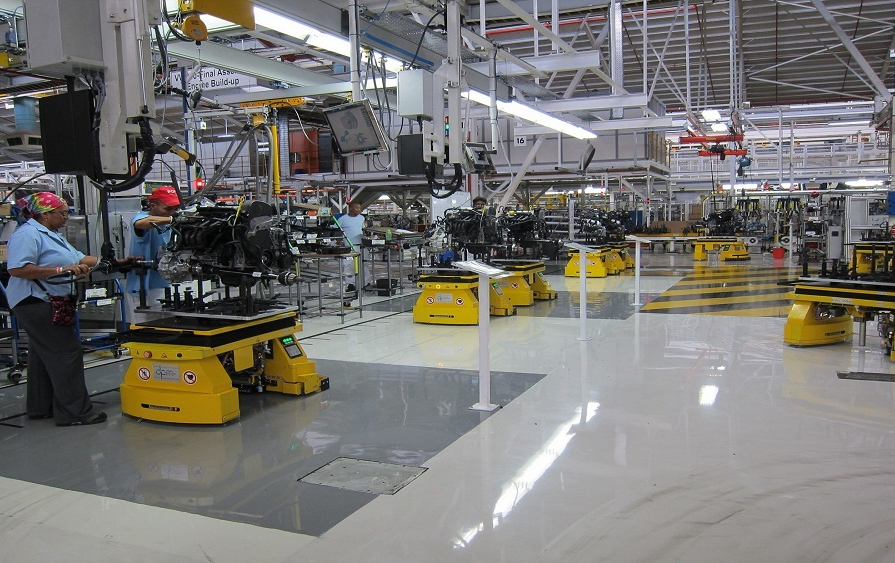
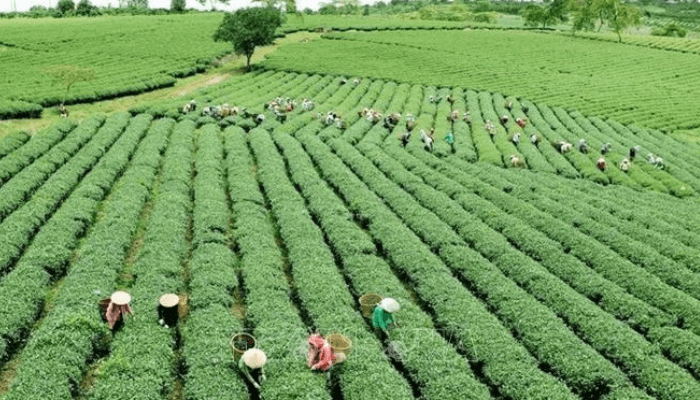
Most economies are not losing manufacturers due to taxes or labor costs. They are losing them because competitors have shifted from building factories to building ecosystems.
This distinction is worth billions, yet many industrial strategies fail to acknowledge its importance. In 1980, Taiwan possessed minimal semiconductor technology and relied solely on its labor force.
Today, Taiwan dominates the global advanced chip manufacturing sector, commanding 90% of the market and generating over $165 billion annually. This success stems from a deliberately designed industrial cluster, the Hsinchu Science Park, established by the US International Trade Administration in 2024.
Taiwan's transformation was not due to exceptionalism but intentional strategy. The nation strategically selected a sector and developed the Hsinchu Science Park not merely as an economic zone with tenants, but as an integrated ecosystem. This ecosystem comprised companies, suppliers, universities, and infrastructure, all engineered to enhance the competitiveness of every firm within it.
Furthermore, this ecosystem was protected by policy consistency that endured across different governments. The outcome is an economy that excels not only in chip production but also in creating conditions that are difficult for competitors to replicate. The advantage lies not in any single facility but in 40 years of accumulated institutional depth.
A factory depreciates over time, whereas an ecosystem compounds its value. This is the critical lesson that emerging economies must embrace and act upon.
The opportunity Taiwan seized in 1980 is the same opportunity many emerging economies possess today.