Nigeria’s headline inflation rate experienced a marginal decrease, settling at 15.10% in January 2026, according to the latest Consumer Price Index (CPI) report released by the National Bureau of Statistics (NBS) on Monday. This represents a slight easing from the 15.15% recorded in December 2025, primarily driven by a significant monthly decline in food prices.
The CPI fell to 127.4 in January from 131.2 in December, marking a 3.8-point decrease.
Year-on-year, the headline inflation showed a substantial slowdown of 12.51 percentage points, dropping from 27.61% in January 2025 to 15.10% in January 2026.
Month-on-month, the inflation rate registered at -2.88% in January, a considerable shift compared to the 0.54% recorded in December. This indicates that average prices declined during the month.
However, the twelve-month average inflation rate saw an increase, rising to 21.97% in January 2026, compared to 17.59% in January 2025. This highlights that price pressures remain elevated when assessed over a longer period.
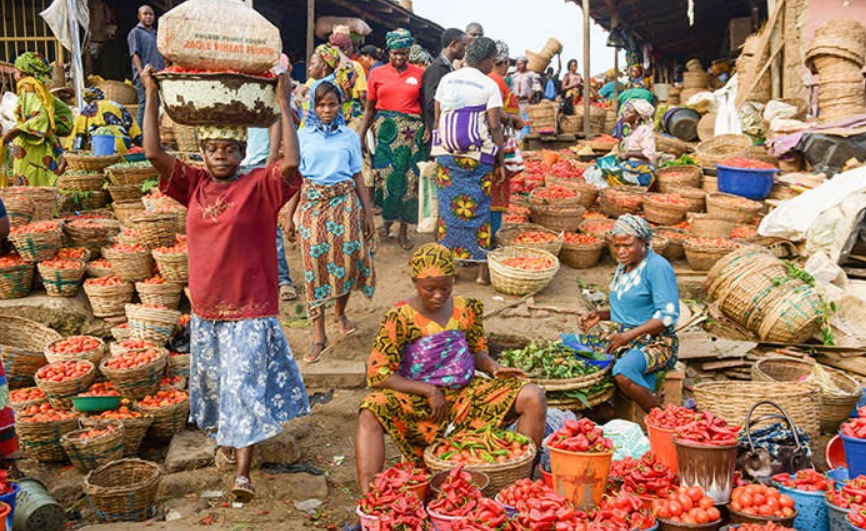
Food inflation recorded a sharp decline in the report. On a year-on-year basis, food inflation slowed to 8.89% in January 2026 from 29.63% in January 2025.
The month-on-month analysis reveals that food prices dropped by -6.02% in January, compared to -0.36% in December. The NBS attributed this decline to reductions in the prices of several key food items, including water yam, eggs, green peas, groundnut oil, soya beans, palm oil, maize, guinea corn, beans, beef, melon and cassava.
The twelve-month average food inflation rate stood at 20.29%, significantly lower than the 38.47% recorded in January 2025.
The NBS report indicates that subnational inflation pressures remain intense in January 2026, despite a month-on-month moderation across most of the high-cost states.
Top 10 Most Expensive States
Below are the top 10 most expensive states to live in Nigeria in January 2026, according to the latest CPI data from the NBS:
Niger posted an all-items index of 126.3 in January 2026, with a year-on-year increase of 16.9%. On a month-on-month basis, inflation slowed by 4.2% compared to December 2025, signalling some short-term easing in price pressures.
Food inflation in Niger rose 12.2% year on year, but declined 7.1% month on month. The sharper monthly decline in food prices suggests that the January inflation reading was driven more by non-food components such as transport and household services.
As a major agricultural state in North Central Nigeria, Niger benefits from crop production and proximity to Abuja. However, rising logistics costs and insecurity along major transport corridors continue to feed into broader consumer prices.