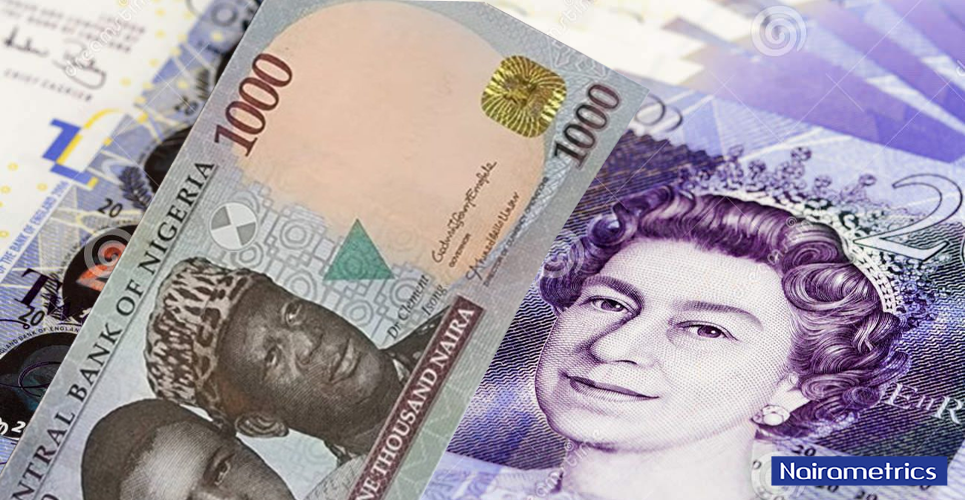
The naira sustained its upward trajectory on Monday, March 17, 2026, appreciating to N1,355 per US dollar at the official foreign exchange market. This represents an improvement from the N1,363.5/$ recorded on Friday, March 14, 2026.
Data from the Central Bank of Nigeria (CBN) indicates that the local currency has maintained a steady recovery trend in recent days, supported by relatively stable market conditions.
Monday’s gain marks the naira’s strongest performance since February 23, 2026, when it closed at N1,353.5/$.
The currency experienced sequential gains throughout the past week: it strengthened to N1,390.5/$ on Tuesday, March 11, 2026, and appreciated further to N1,373.5/$ on Wednesday, March 12, 2026. On Thursday, March 13, 2026, the naira continued its upward movement, closing at N1,370/$, before advancing to N1,363.5/$ by Friday, March 14, 2026.
During Monday’s trading session, the naira fluctuated between N1,365.35/$ and N1,354/$, reflecting relatively stable intraday activity.
Global factors also shaped market sentiment, as investors tracked movements in the U.S. dollar alongside geopolitical tensions involving Iran and their potential impact on global energy markets. In early Asian trading, the euro slipped by 0.12 per cent to $1.1492, while the British pound declined by 0.1 per cent to $1.33. The dollar index remained largely unchanged at 99.913.
The Australian dollar also weakened slightly ahead of a key interest rate decision by the country’s central bank, adding to cautious sentiment in global markets.
The apex bank noted that Nigeria’s improving external reserve position could help stabilise the naira against sustained pressure. Net foreign exchange reserves rose to $34.80 billion at the end of 2025, while gross external reserves increased to $50.45 billion as of February 2026, driven by stronger oil earnings and higher foreign inflows.
The CBN Governor, Olayemi Cardoso, stated that ongoing monetary and foreign exchange reforms are aimed at boosting investor confidence and enhancing market liquidity. According to projections in the bank’s 2026 macroeconomic outlook, Nigeria’s external reserves could rise further to $51.04 billion, largely supported by improved oil revenues.